

Subcutaneous Drug Delivery Devices Market to Reach USD $49.77 Billion by 2030 at 7.5% CAGR
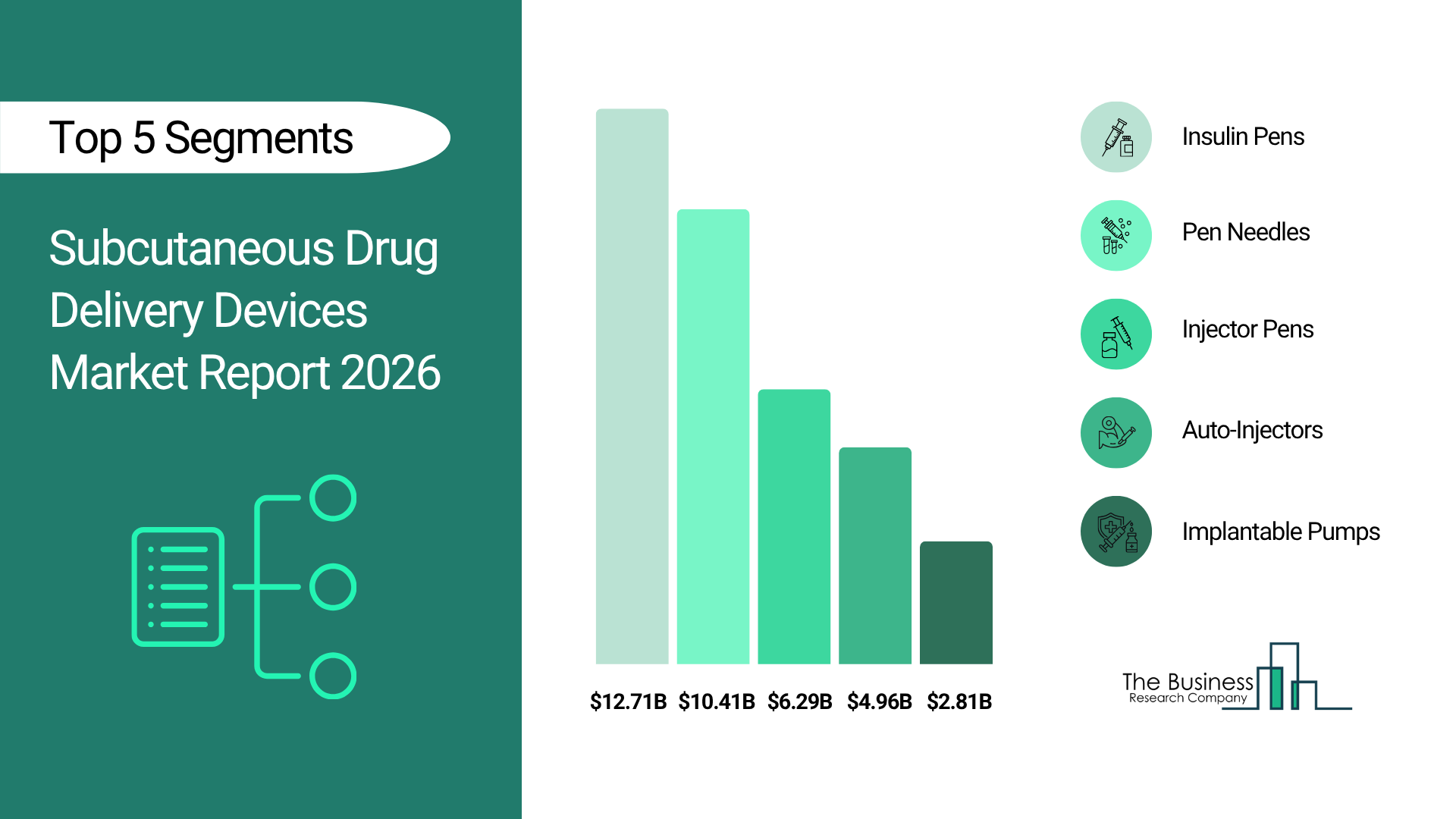
Subcutaneous Drug Delivery Devices Market Report 2026
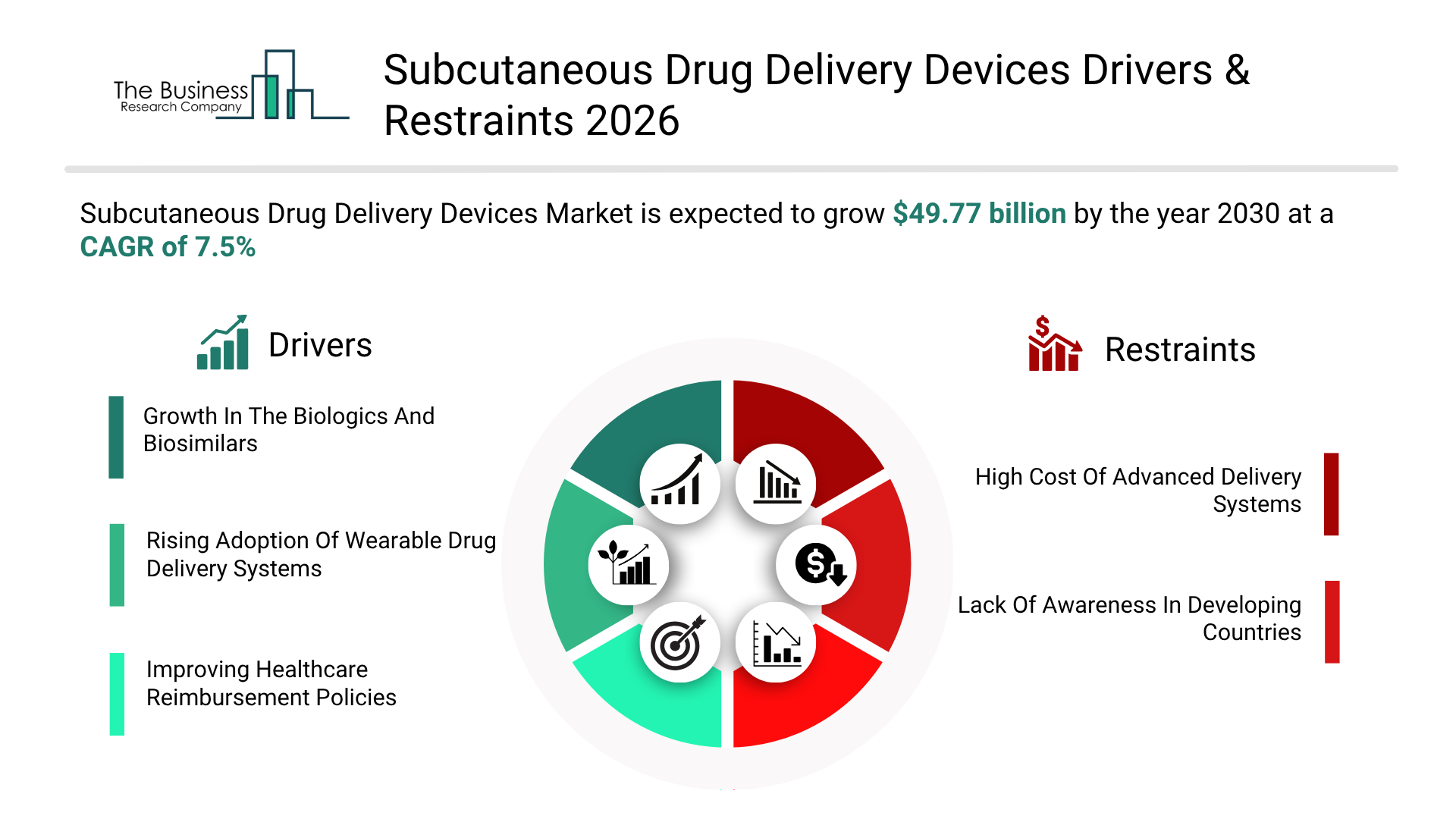
Subcutaneous Drug Delivery Devices Market Drivers & Restraints 2026
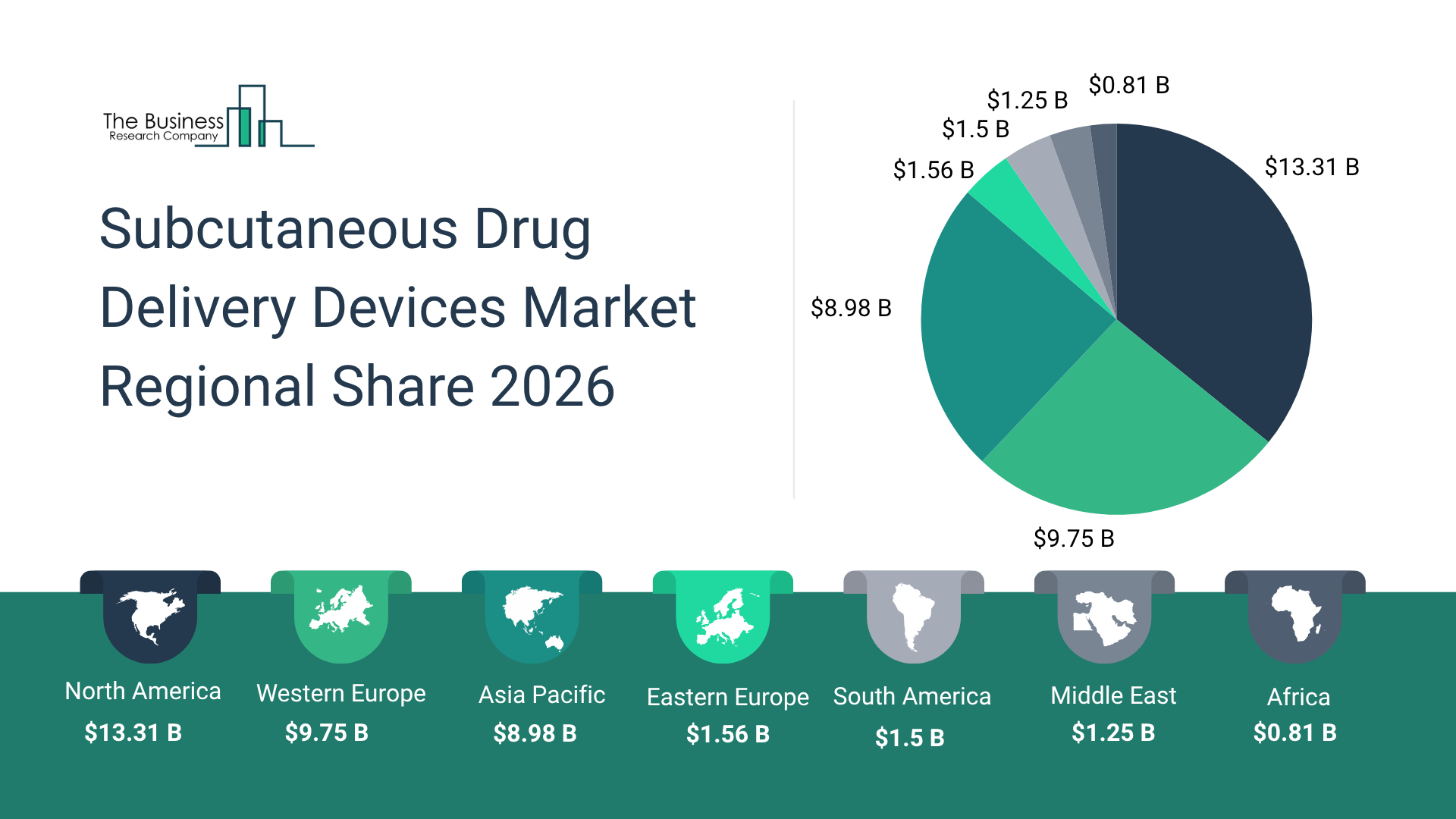
Subcutaneous Drug Delivery Devices Market Regional Share 2026
The Business Research Company's Subcutaneous Drug Delivery Devices Market Report 2026 – Market Size, Trends, And Global Forecast 2026-2035
LONDON, GREATER LONDON, UNITED KINGDOM, April 30, 2026 /EINPresswire.com/ -- "Subcutaneous Drug Delivery Devices market to surpass $50 billion in 2030. In comparison, the Drug-Delivery Technology market, which is considered as its parent market, is expected to be approximately $91 billion by 2030, with Subcutaneous Drug Delivery Devices to represent around 55% of the parent market. Within the broader Pharmaceuticals, which is expected to be $2,513 billion by 2030, the Subcutaneous Drug Delivery Devices market is estimated to account for nearly 2% of the total market value.
Which Will Be The Biggest Region In The Subcutaneous Drug Delivery Devices Market In 2030?
North America will be the largest region in the subcutaneous drug delivery devices market in 2030, valued at $17 billion. The market is expected to grow from $13 billion in 2025 at a compound annual growth rate (CAGR) of 7%. The strong growth can be attributed to the high prevalence of chronic diseases such as diabetes and cancer, increasing adoption of self-administration devices, strong presence of leading pharmaceutical and medical device companies, growing demand for biologics, advancements in wearable and connected drug delivery technologies, and well-established healthcare infrastructure supporting home-based care.
Which Will Be The Largest Country In The Global Subcutaneous Drug Delivery Devices Market In 2030?
The USA will be the largest country in the subcutaneous drug delivery devices market in 2030, valued at $15 billion. The market is expected to grow from $11 billion in 2025 at a compound annual growth rate (CAGR) of 6%. The strong growth can be attributed to rising incidence of diabetes and autoimmune disorders, widespread adoption of insulin delivery devices, increasing preference for patient-centric and minimally invasive drug administration, rapid integration of digital health and connected injectors, and strong reimbursement frameworks supporting advanced drug delivery solutions.
Request A Free Sample Of The Subcutaneous Drug Delivery Devices Market Report
https://www.thebusinessresearchcompany.com/sample_request?id=19723&type=smp&utm_source=EINPresswire&utm_medium=Paid&utm_campaign=Apr_PR
What Will Be The Largest Segment In The Subcutaneous Drug Delivery Devices Market In 2030?
The subcutaneous drug delivery devices market is segmented by product type into insulin pens, pen needles, injector pens, auto-injectors, and implantable pumps. The insulin pens market will be the largest segment of the subcutaneous drug delivery devices market segmented by product type, accounting for 34% or $17 billion of the total in 2030. The insulin pens market will be supported by the growing global diabetic population, increasing preference for convenient and accurate dosing devices, widespread adoption of reusable and disposable pen systems, technological advancements such as smart insulin pens, and strong demand for self-administration solutions in homecare settings.
The subcutaneous drug delivery devices market is segmented by application into diabetes, fertility, and oncology.
The subcutaneous drug delivery devices market is segmented by end-user into hospitals and clinics, homecare settings, and ambulatory surgical centers.
What Is The Expected CAGR For The Subcutaneous Drug Delivery Devices Market Leading Up To 2030?
The expected CAGR for the subcutaneous drug delivery devices market leading up to 2030 is 8%.
What Will Be The Growth Driving Factors In The Global Subcutaneous Drug Delivery Devices Market In The Forecast Period?
The rapid growth of the global subcutaneous drug delivery devices market leading up to 2030 will be driven by the following key factors that are expected to reshape biologics administration practices, patient-centric treatment models, device innovation strategies, expansion of the subcutaneous drug delivery devices, and home-based healthcare delivery frameworks across the global healthcare ecosystem.
Growth In The Biologics And Biosimilars – The growth in biologics and biosimilars is expected to become a key driver for the subcutaneous drug delivery devices market by 2030. The increasing use of biologics in the treatment of chronic conditions such as diabetes, cancer, and autoimmune diseases is driving demand for efficient and patient-friendly delivery systems. Subcutaneous administration is preferred for many biologics due to its convenience, reduced need for hospital visits, and improved patient compliance. Additionally, the rising availability of cost-effective biosimilars is expanding patient access to advanced therapies, further increasing device demand. Pharmaceutical companies are also focusing on developing formulations compatible with self-injection devices. As a result, the growth in biologics and biosimilars is anticipated to contribute approximately 2.8% annual growth to the market.
Rising Adoption Of Wearable Drug Delivery Systems – The rising adoption of wearable drug delivery systems is expected to emerge as a major factor driving the expansion of the subcutaneous drug delivery devices market by 2030. Wearable injectors and on-body delivery systems enable continuous or large-volume drug administration with minimal patient intervention, improving treatment adherence and convenience. These systems are particularly beneficial for chronic disease management and biologic therapies requiring precise and sustained dosing. Technological advancements such as connectivity, real-time monitoring, and integration with digital health platforms are further enhancing their adoption. Consequently, the rising adoption of wearable drug delivery systems is projected to contribute around 2.5% annual growth to the market.
Improving Healthcare Reimbursement Policies – Improving healthcare reimbursement policies are expected to act as a key growth catalyst for the subcutaneous drug delivery devices market by 2030. Favorable reimbursement frameworks across developed healthcare systems are encouraging the adoption of advanced drug delivery devices by reducing out-of-pocket costs for patients. Insurance coverage for self-injection devices and home-based therapies is supporting the shift away from hospital-administered treatments. Additionally, reimbursement support for innovative biologics and combination products is driving investments in advanced delivery technologies. As reimbursement policies continue to evolve, accessibility and affordability of these devices are expected to improve significantly. Therefore, improving healthcare reimbursement policies are projected to contribute approximately 2.3% annual growth to the market.
Access The Detailed Subcutaneous Drug Delivery Devices Market Report Here
https://www.thebusinessresearchcompany.com/report/subcutaneous-drug-delivery-devices-global-market-report?utm_source=EINPresswire&utm_medium=Paid&utm_campaign=Apr_PR
What Are The Key Growth Opportunities In The Subcutaneous Drug Delivery Devices Market In 2030?
The most significant growth opportunities are anticipated in the insulin pens market, the pen needles market, the injector pens market, the auto-injectors market, and the implantable pumps market. Collectively, these segments are projected to contribute over $15 billion in market value by 2030, driven by the rising global prevalence of diabetes and chronic diseases, increasing adoption of self-administration devices, growing demand for biologics and biosimilars, advancements in patient-friendly and smart drug delivery technologies, and the shift toward home-based healthcare solutions. This momentum reflects the healthcare industry’s focus on improving treatment adherence, enhancing patient convenience, and enabling precise and efficient drug delivery, accelerating growth across the global subcutaneous drug delivery devices ecosystem.
The insulin pens market is projected to grow by $5 billion, the pen needles market by $4 billion, the injector pens market by $3 billion, the auto-injectors market by $2 billion, and the implantable pumps market by $1 billion over the next five years from 2025 to 2030.
Learn More About The Business Research Company
The Business Research Company (www.thebusinessresearchcompany.com) is a leading market intelligence firm renowned for its expertise in company, market, and consumer research. We have published over 17,500 reports across 27 industries and 60+ geographies. Our research is powered by 1,500,000 datasets, extensive secondary research, and exclusive insights from interviews with industry leaders.
We provide continuous and custom research services, offering a range of specialized packages tailored to your needs, including Market Entry Research Package, Competitor Tracking Package, Supplier & Distributor Package and much more.
Disclaimer: Please note that the findings, conclusions and recommendations that TBRC Business Research Pvt Ltd delivers are based on information gathered in good faith from both primary and secondary sources, whose accuracy we are not always in a position to guarantee. As such TBRC Business Research Pvt Ltd can accept no liability whatever for actions taken based on any information that may subsequently prove to be incorrect. Analysis and findings included in TBRC reports and presentations are our estimates, opinions and are not intended as statements of fact or investment guidance."
Oliver Guirdham
The Business Research Company
+44 7882 955267
info@tbrc.info
Visit us on social media:
LinkedIn
Facebook
X
Legal Disclaimer:
EIN Presswire provides this news content "as is" without warranty of any kind. We do not accept any responsibility or liability for the accuracy, content, images, videos, licenses, completeness, legality, or reliability of the information contained in this article. If you have any complaints or copyright issues related to this article, kindly contact the author above.
